Loading episode...
EP.26
Apr 19, 202600:13:49Season 1
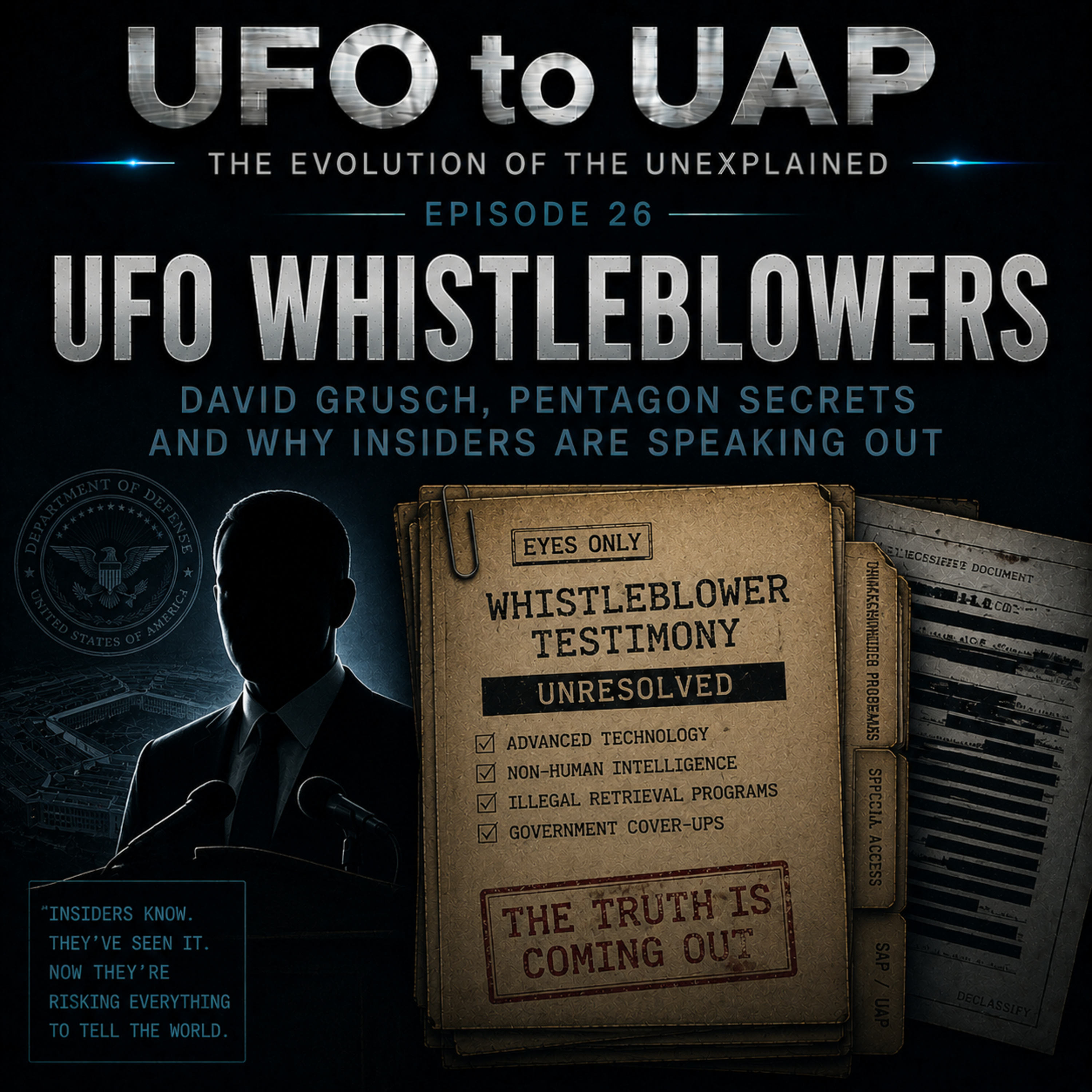
The UFO Whistleblower Pattern: Insights into UAP Disclosures from Military Insiders
0:00 / 0:00
// Show Notes
Why are military and intelligence insiders coming forward about UFOs and UAPs—and what does the repeating whistleblower pattern reveal about the system behind disclosure?
In this episode of UFO to UAP Explained, host Matt Tones examines why figures such as David Grusch, Luis Elizondo and Christopher Mellon have brought UAP claims into public view. Rather than treating whistleblower testimony as definitive proof, the episode explores it as a signal of internal pressure within government, defence and intelligence institutions.
Discover how classification, compartmentalisation, need-to-know access, legal restrictions and professional stigma limit what insiders can see and publicly reveal. The discussion explains why credible witnesses may still lack verifiable evidence, how new reporting channels allow claims to enter official processes, and why investigations often produce reviews and hearings instead of clear answers.
Are whistleblowers exposing secret UFO programs, reflecting disagreement inside the national-security system, or participating in controlled disclosure? This episode investigates the recurring cycle of insider claims, government procedure and controlled ambiguity—and asks why these voices are emerging now.
Keywords:
UAP whistleblowers, UFO whistleblower pattern, military UFO insiders, intelligence community UAP claims, David Grusch, Luis Elizondo, Christopher Mellon, UAP disclosure, UFO disclosure, secret UFO programs, classified UAP information, government compartmentalisation, need-to-know access, UAP whistleblower testimony, military insider testimony, controlled disclosure, controlled ambiguity, Pentagon UFO investigation, national-security UAP risk, UFO reporting stigma, government UAP hearings, unidentified anomalous phenomena, UFO to UAP Explained.